Building located in the historic centre of the town of Betanzos, constructed at the beginning of the 20th century (1910). It has a rectangular plan surrounded by walls with small pavilions at the corners. The slaughter area is located at the centre of the building. On the main façade there are three clearly differentiated volumes, the central one being taller. The entrance doorway features a large horseshoe arch decorated with ironwork. On the sides, the arrangement of the openings is completely symmetrical. The wall surfaces combine rubble masonry and ashlar stonework, as well as decorative tiles on the upper part.
Modernism Route
Route showcasing the main examples of modernist architecture in Betanzos and their artistic and historical value.
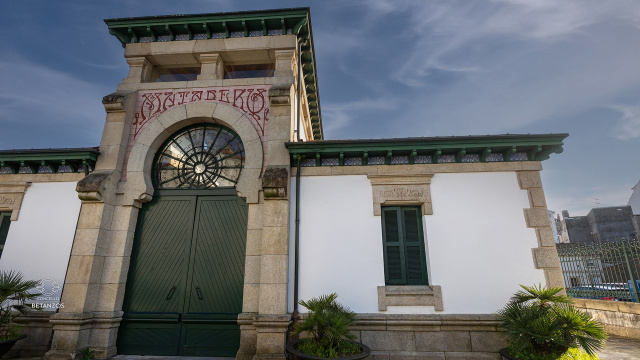
Former Municipal Slaughterhouse
Former municipal slaughterhouse from the early 20th century, with distinctive architecture and iron and tile decoration.
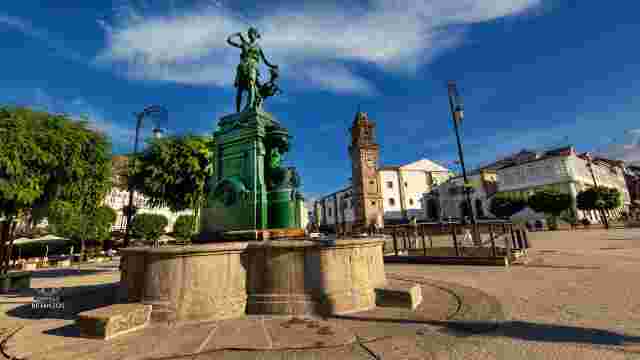
Diana the Huntress Fountain
Monumental fountain inaugurated in 1867, a replica of the Diana of the Louvre and one of Betanzos’ most recognisable urban symbols.
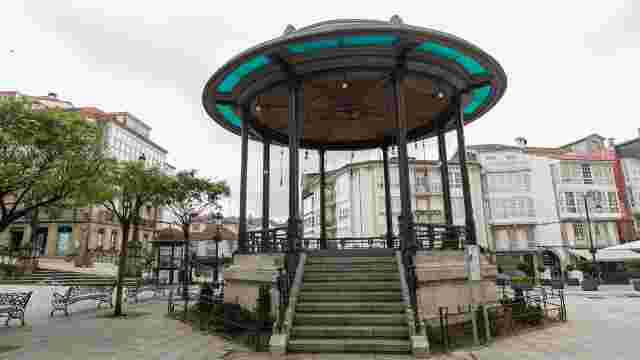
Bandstand
Neoclassical 18th-century manor house, with an L-shaped floor plan and a large heraldic coat of arms, promoted by Archbishop Sánchez Baamonde.
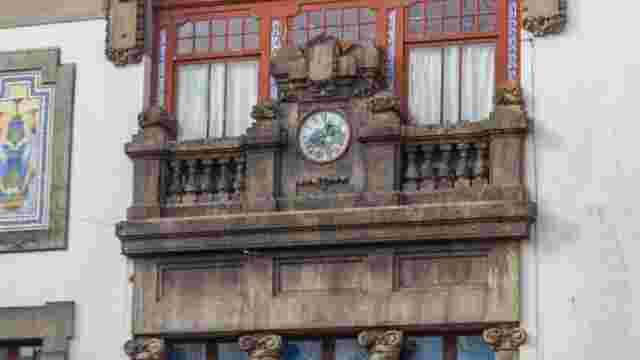
Casa Núñez
Modernist building by Rafael González Villar combining architecture, commerce and art, now home to the CIEC Foundation.
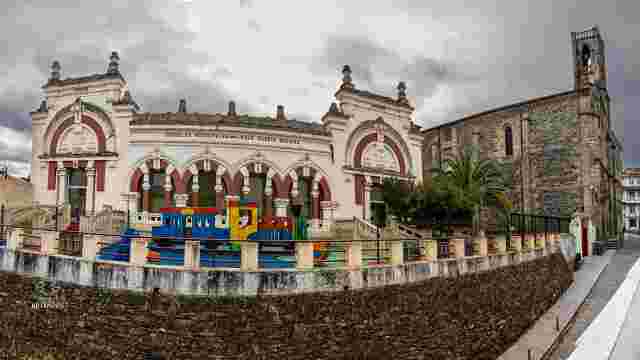
Jesús García Naveira School
Os Cabildos or San Francisco Schools, built in 1917, a unique example of modernist architecture with Islamic and Baroque references.
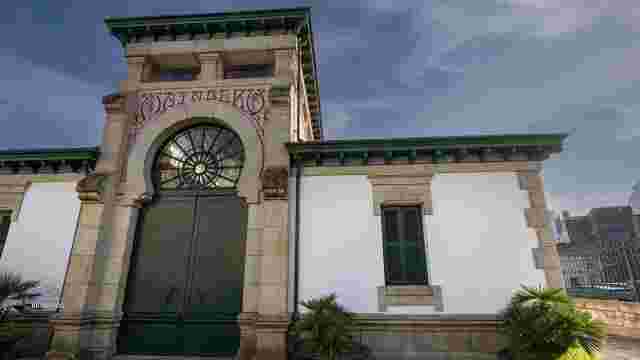
Former Municipal Slaughterhouse
Former municipal slaughterhouse from the early 20th century, with distinctive architecture and iron and tile decoration.
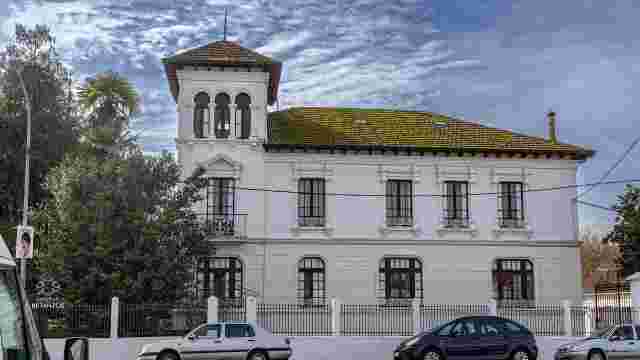
Casa da Rega or Villa Flora
Casa da Rega, built in 1922, an outstanding example of Indianos architecture and 20th-century Galician eclecticism.