Betanzos in three days
A complete itinerary to discover Betanzos at a relaxed pace, combining historic heritage, nature, art and local traditions.
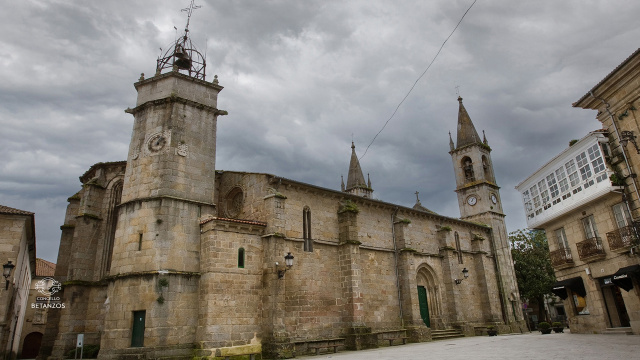
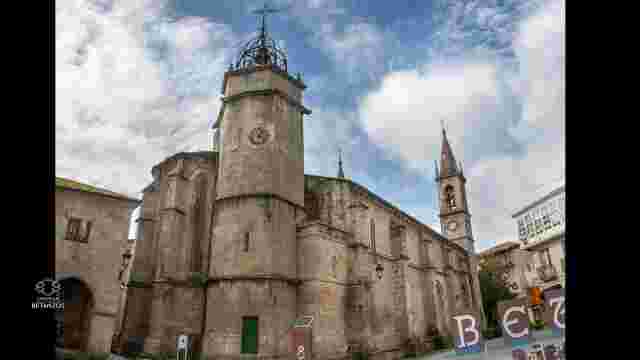
Church of Santiago
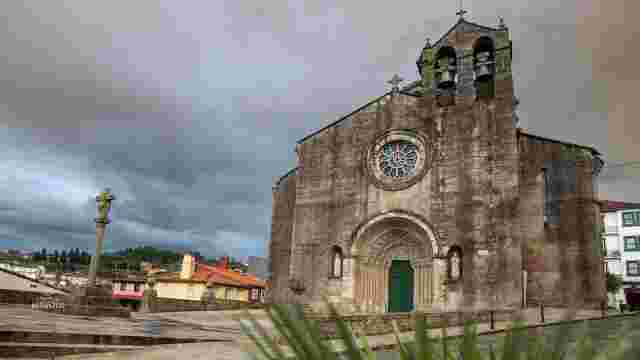
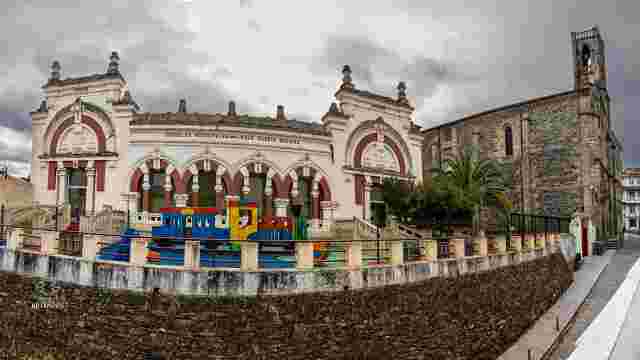
It dates from the 15th century and was built by Fernán Pérez de Andrade “O Mozo” on the site of an earlier Romanesque church. It shows similarities, both in its architecture and iconography, with Santa María do Azougue. It has a basilical plan with three naves, the central one wider than the lateral ones, and three apses. Pairs of supports in the form of pillars with attached columns divide the interior of the church into five bays. Along the southern wall, four chapels open off the nave, altering the original ground plan of the church. The roof of the main body of the church is a gabled wooden structure and features a coffered ceiling made at the end of the 19th century. The main doorway, semicircular on the exterior, has archivolts with various series of vegetal and animated figures; in the centre there is a Christ figure flanked by His Mother with the Child in her arms and Saint James the Apostle on horseback, the latter also appearing on the tympanum. Four pairs of attached columns with Romanesque-style capitals support this doorway. The north lateral doorway is pointed, with simple mouldings; a pair of attached columns and a cross in low relief on the tympanum make up its decoration. Of the southern doorway only the embedded tympanum remains, located at the end of a tunnel that opens into the church; on the interior side it depicts Saint James on horseback, and on the opposite side Christ surrounded by four figures and the instruments of His Passion. This doorway, known as the Holy Door, was the one used by pilgrims travelling to Santiago who visited the Sanctuary of Os Remedios to enter the church. It is a fine example of the transition from Romanesque to Gothic architecture, although it was somewhat altered by the reconstruction of the main façade carried out in 1900, during which the church’s only tower was removed, the entire frontispiece was rebuilt, and two towers topped with long concrete spires were added. Fortunately, the main doorway was preserved.