Betanzos Monumental Route
Route through the historic centre of Betanzos, discovering its main monuments, squares and charming corners.
Porta da Vila
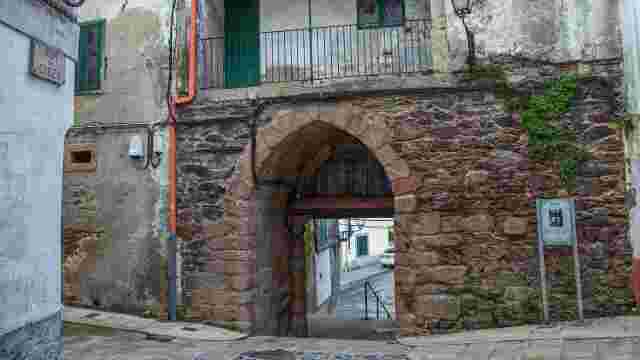
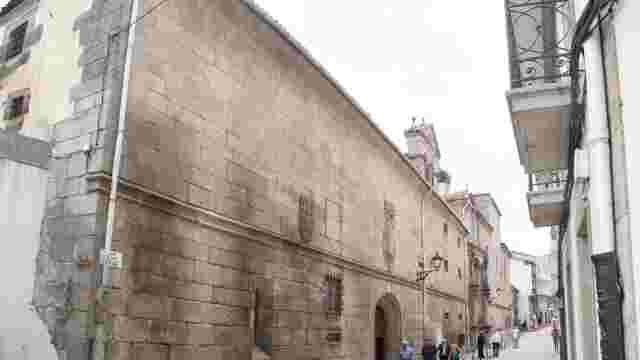
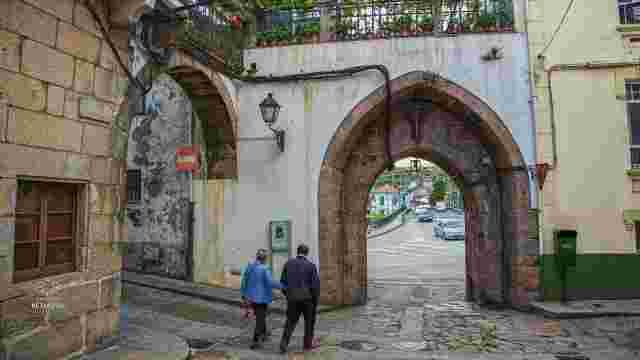
This gate was also known as the Royal Gate due to the coats of arms that decorated it. These heraldic shields could be seen from the Campo da Feira and were placed above the gate as follows: on the left, the coat of arms of the Kingdom of Galicia with five chalices or cups; in the centre, that of Castile and León; and on the right, that of the city, featuring the bridge and the tower. Beneath them was the inscription LAS: DEL: REI: NO: E: LA CIBDAD. They are believed to date from the last third of the 15th century, after Betanzos was granted the title of city by King Henry IV in 1465. Interestingly, the coats of arms were reinstalled during the reconstruction of the gates and walls ordered by the Catholic Monarchs. The Galician coat of arms on this gate is the oldest known representation of this emblem preserved in the entire region. With its five chalices, it symbolises the five provinces into which the Kingdom of Galicia was divided until the 15th century, later becoming seven and eventually the current division into four. In 1865, the Betanzos City Council decided to demolish the gates because they were considered unsightly and hindered access to the city. During that year, this gate was demolished, although the coats of arms were preserved and placed on nearby houses. It was not until 1903 that an urban expansion and widening project was undertaken, later completed in 1911 with the addition of modernist railings and streetlights.